
Innovation
Biotech
Environment
Testing
Research
Innovation
Biotech
Environment
Testing
Research
Eue Jin Jeong was born in Feb 21 1952 in Pusan, South Korea as the first son of father Won Kyo Jeong a professional mechanical engineer and mother Soon Ok Hong a house wife. He grew up to be a curious boy on finding differences on how the way things are. He accidentally found his uncle’s electronic gadgets (coil and variable capacitor assembly) in the drawer of his desk when he was three years old and it profoundly overwhelmed his curiosity.
When he was 4 years old, he was awe struck by the beauty of the artistic vision of the earth seen from the landscape view of the moon on the cover of his sister’s text book of science and felt the feeling of déjà vu. He excelled in math and science in his class in his elementary school years. His teacher in his sixth grade often asked him to show in front of his 65 classmates (the class room there was very crowded) how to solve the first order math equation in the black board. His early interest in math deepened when he learned that you can measure the height of the building by using trigonometry without having to go on top of the building.
He became interested in electronics in his junior high school years and joined the electronics club and performed many electronic experiments and learned the principles of electromagnetic phenomena from first hand. He first majored in the electrical engineering at the Han Yang University in Korea in 1970 but he decided to switch to Physics major at Yon Sei University in 1977 after finishing his military service which was/is still mandatory in South Korea. He found physics interests him more because he wants to find out the fundamental principles of the universe on how matters work.

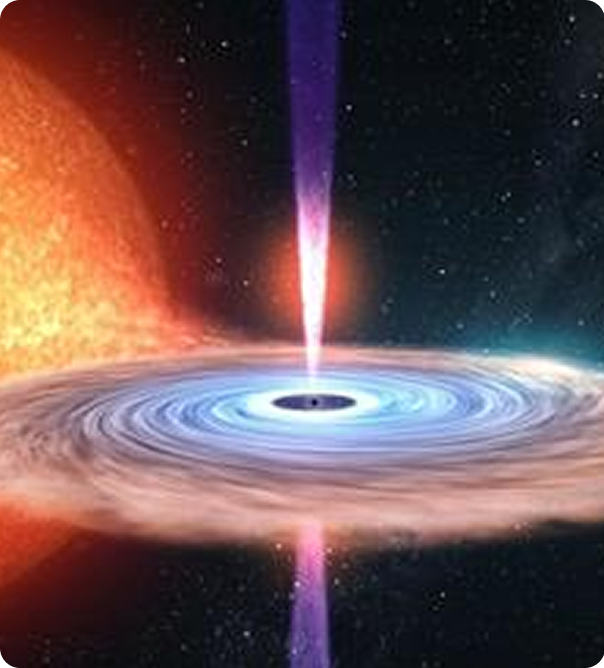
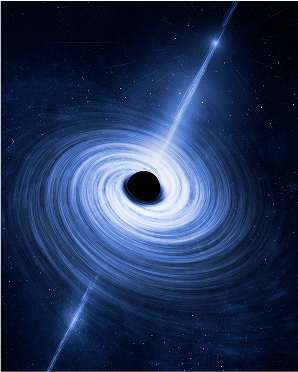
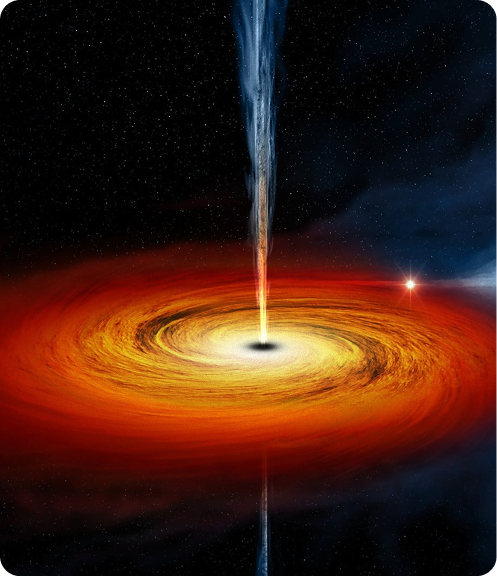
He enjoyed the graduate course works in Ann Arbor and had a lot of time to contemplate the workings of the universe. The elementary particle physics interests him the most. He enjoyed the class of Dr. Martinus Veltman on group theory and the mathematical idea of the dimensional regularization scheme. It was intellectually pleasing to him. He contemplated on the fundamental cause of the mass in the elementary particles and the cause of the gravitation and felt something was terribly missing. He discovered QCD QED potentials using dimensional regularization method of renormalization, asymptotic freedom of the quark interactions in close distances, and Yukawa potential model at this time.
He discovered the anomaly of the shift of the center of mass in the rotating hemispherical system in 1995 and published the paper “Relativistic Center of Mass Shift; Gravitational Dipole Moment” in 1997 in the Hadronic Journal.
He continuously researched and refined the theory of dipole gravity. He met Dr. Don Hinson who plotted the first quadrupole (two superposed dipole) gravity potential from the rotating spherical shell. He was amazed by the result because it showed the clear sign of the jets from the rotating ultra compact stellar objects at the same time showing the Lens-Thirring force at the center of the sphere. He published the paper “Non-Newtonian Gravitational Force Experienced by the Gravitational Dipole Moment in the Two Mass Pole Model Universe” in 1999 in the journal Physica Scripta. In 1999 while working as a research scientist at the Air Force Institute of Technology in Dayton Ohio, for the project of developing high temperature semiconductor material, he found while taking a walk in the evening time, that the stored energy in charged capacitors is missing the conventional repulsive electrostatic potential energy calculation which opened the can of worm in the well-developed conservation of energy principle in modern science.

Major: Experimental Physics
Degree: PhD (1985-1989)
Major: Theoretical High Energy Physics
Degree: Masters (1980-1984)
Major: Physics
Degree: Bachelor (1977-1980)
Selected for the “National Study Abroad Scholarship Program” in Physics from South Korean Education Ministry in 1980 which provided the tuition and living expenses for four years 1980-1984
Received scholarship at the graduate school of the University of Texas at Austin from 1984-1989
The University of Texas at Austin, TexasDuties: Experimental Research on Electron Energy Loss Spectroscopy 1990-1991
Pohang Light Source Project at POSCO, Pohang, Korea
Duties: Subdivision research and development in the Pohang Synchrotron Radiation Accelerator project 1991-1995
Sook Myung Women’s University, Seoul, Korea Duties: Teaching undergraduate physics course work on “Optics” 1995-1996
Yon Sei University, Seoul, Korea
Duties: Teaching physics graduate course on Special Topics 1995-1996
The University of Texas at Austin, Texas
Duties: Experimental Research on Electron Energy Loss Spectroscopy 1997-1998
Air Force Institute of Technology, Wright Patterson Air Force Base, Dayton, Ohio
Duties: Experimental research using DLTS on the characterization of the deep level transient properties on the GaN and SiC semiconductor materials. 1998-2000
Tachyonics Institute of Technology, Austin, Texas,Research and development of the anomalous energy and gravity-electromagnetic effect in relation to the gravity and the energy imbalance phenomenon (2000-2024)
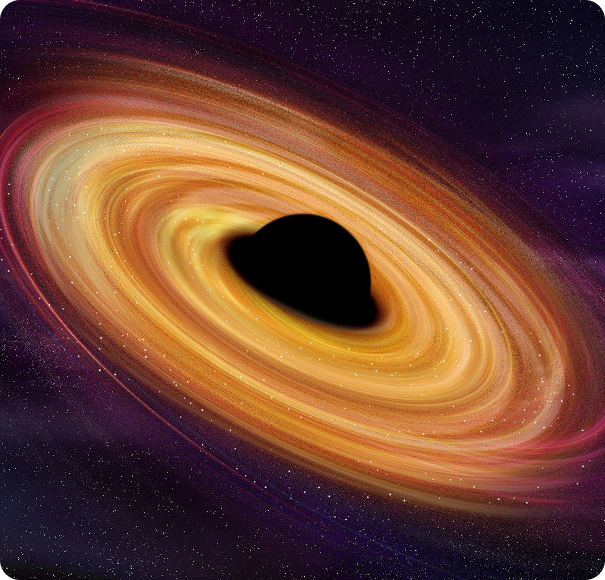
Eue Jin Jeong, (April 1998) “Non-Newtonian Dynamic Gravitational Field from The Longitudinally Asymmetric Rotating Objects”: Paper presented at the American Physical Society, Mixed session, Sunday morning, April 19 1998, Room C120, Columbus Conv. Center.
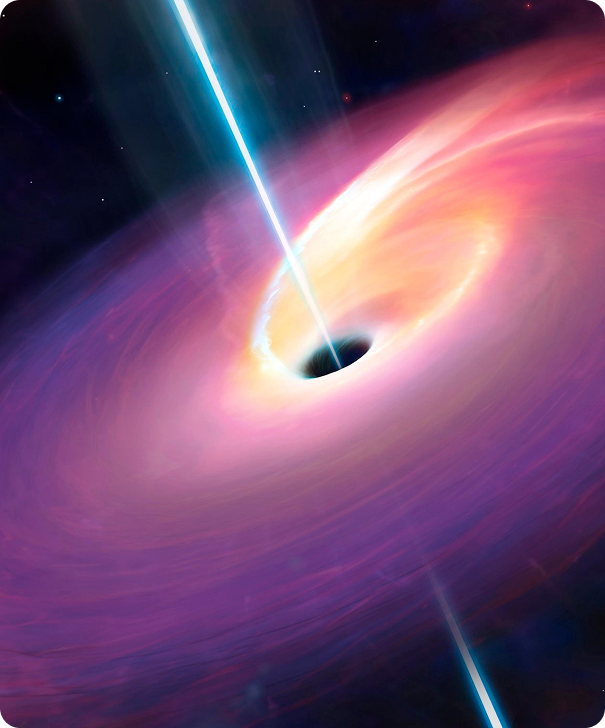
I’m interested in exploring the unexplained mysteries of the universe. The theory of dipole gravity was one of them. But there are many other mysteries in the universe waiting to be discovered. While such possibilities remain open, the numerical simulation of the spiral galaxy formation will be an immediate next step for the extensive research of dipole gravity.
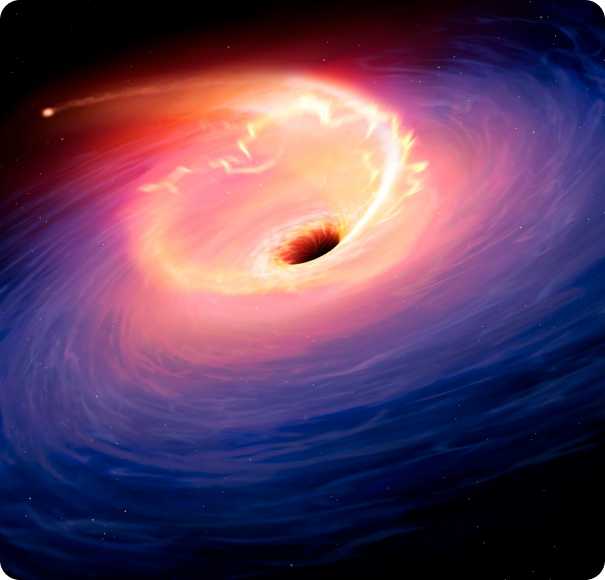
Somehow, he noticed that science is restricted in the main point of natural interest that attracts attention by physicists. It looks like the scientific community has come to the point where the truth doesn’t matter. It looks like it matters who is talking. Truth in science is basically about discovering the fundamental secret of the universe and showing the experimental proof of the theory and move on. This is not happening. He believes that the tachyonic magnetic monopole neutrinos are the key secret element in every corner of the universe from Aether to Quantum Mechanics to Gravitation that are tirelessly working for the stability of the universe.
For the future civilization to flourish on earth and also to explore the universe, it is necessary to propagate this knowledge to the major universities all over the world. This is the primary reason for the creation of this non-profit organization. In fact, it is not a religion in any traditional sense, but in the current atmosphere of the scientific trend and community, this may be the only possible way to propagate the key knowledge of the universe.